|
Where did Montessori come from?
Montessori (pronounced
MON-tuh-SORE-ee) education was founded in 1907 by Dr. Maria Montessori, the
first woman in Italy to become a physician. She based her educational methods on scientific
observation of children's learning processes. Guided by her discovery that
children teach themselves, Dr. Montessori designed a "prepared
environment" in which children could freely choose from a number of
developmentally appropriate activities. Now, nearly a century after Maria
Montessori's first casa dei bambini ("children's house") in Rome, Montessori education
is found all over the world, spanning ages from birth to adolescence.
Where can I find a good, brief,
introduction to Montessori from birth through the school years?
At the Michael Olaf Montessori
"text" site there is actually an E-book of Montessori philosophy and
practice: www.michaelolaf.net.
What is the difference between
Montessori and traditional education?
Montessori emphasizes learning
through all five senses, not just through listening, watching, or reading.
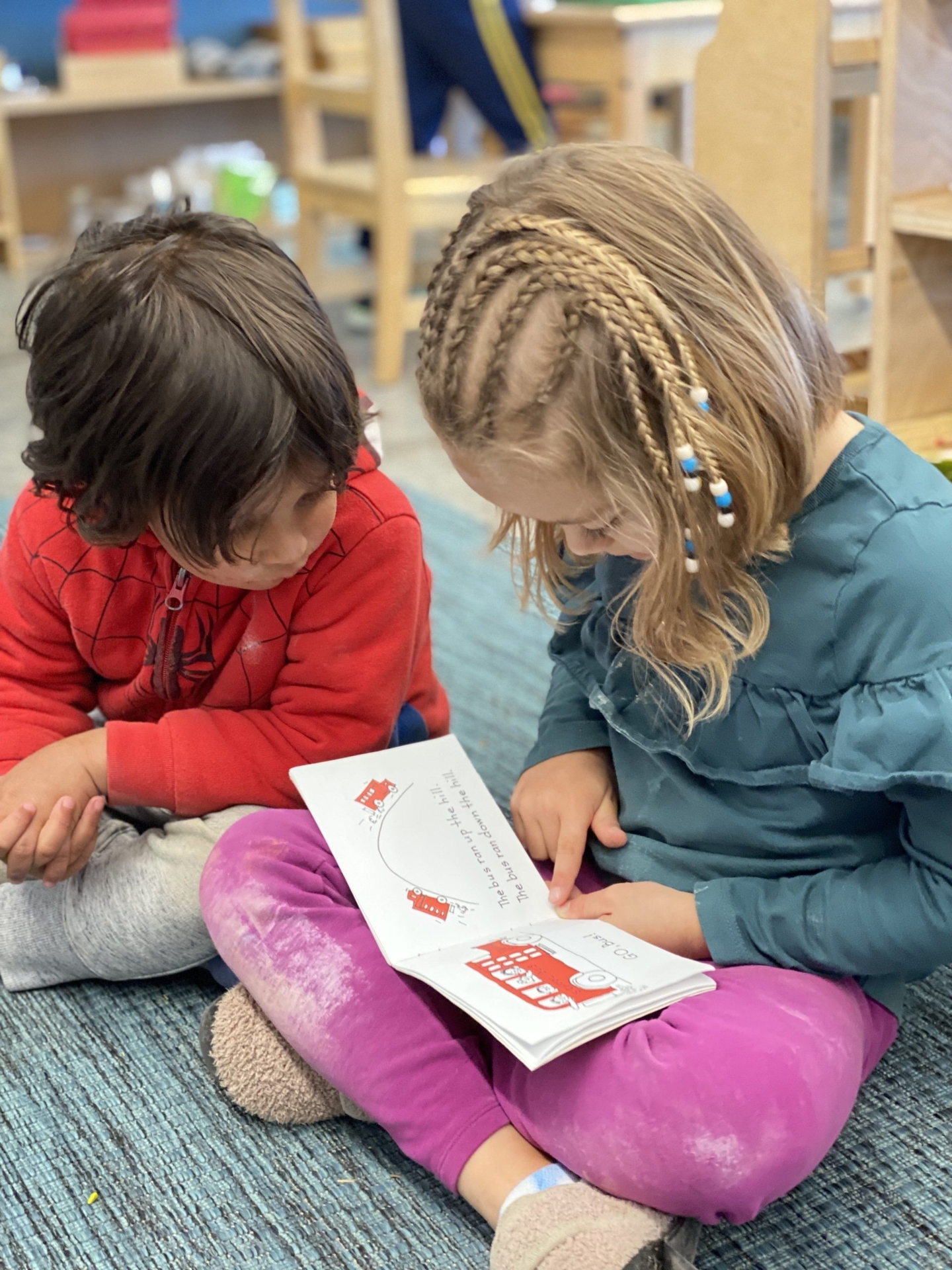
Children in Montessori classes learn at their own, individual pace and
according to their own choice of activities from hundreds of possibilities.
Learning is an exciting process of discovery, leading to concentration,
motivation, self-discipline, and a love of learning. Montessori classes place
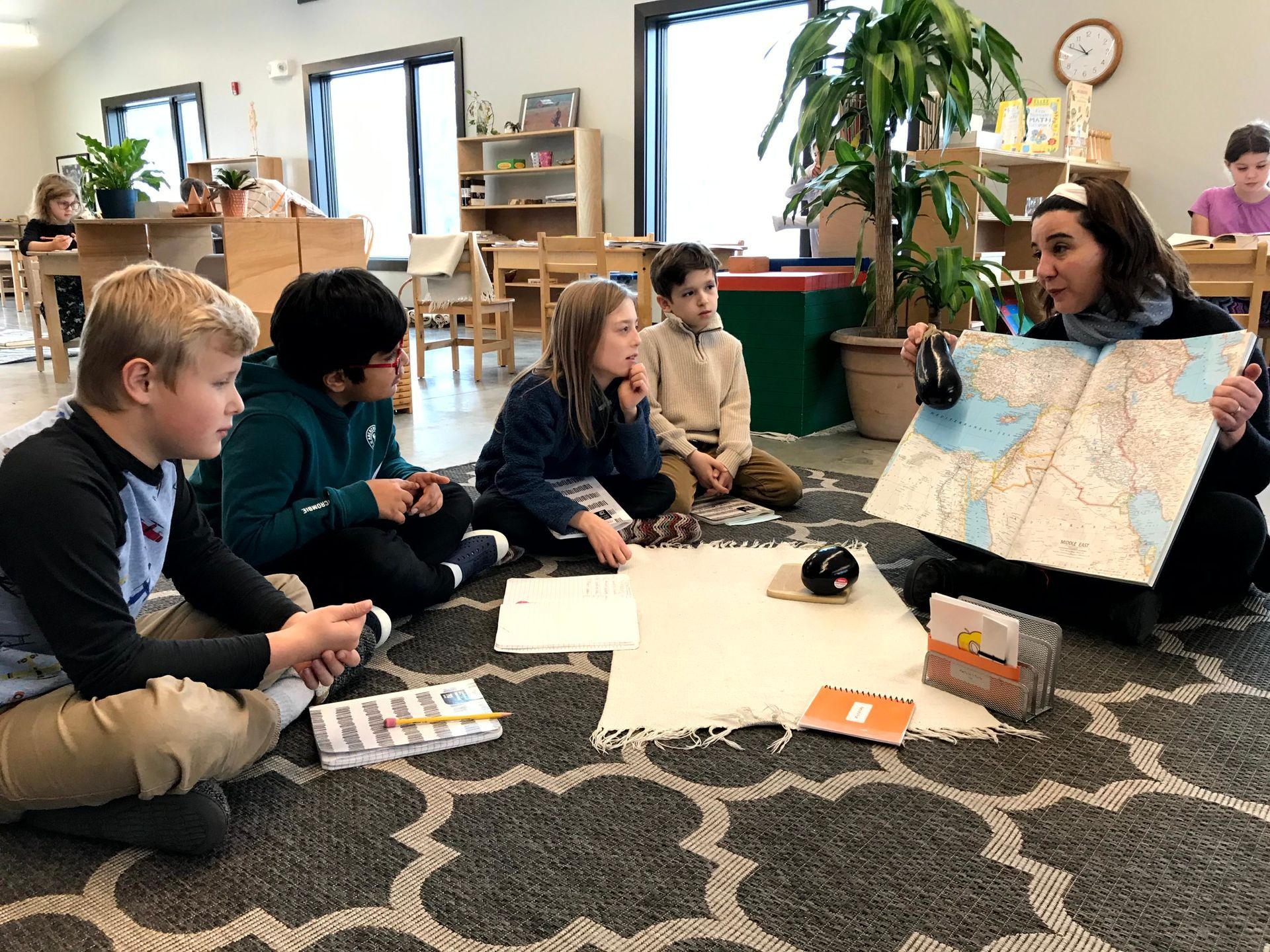
children in three-year age groups (3-6, 6-9, 9-12, and so on), forming
communities in which the older children spontaneously share their knowledge
with the younger ones. Montessori represents an entirely different approach to
education.
What is the Difference in Montessori versus Traditional Education
|
Montessori Education
|
|
Traditional Education
|
|
Emphasis on cognitive structures and social development
|
|
Emphasis on rote knowledge and social development
|
|
Teacher's role is unobtrusive; child actively participates in
learning
|
|
Teacher's role is dominant, active; child is a passive
participant
|
|
Environment and method encourage internal self-discipline
|
|
Teacher is primary enforcer of external discipline
|
|
Individual and group instruction adapts to each student's
learning style
|
|
Individual and group instruction conforms to the adult's
teaching style
|
|
Mixed-age grouping
|
|
Same-age grouping
|
|
Children encouraged to teach, collaborate, and help each other
|
|
Most teaching done by teacher and collaboration is discouraged
|
|
Child formulates concepts from self-teaching materials
|
|
Child is guided to concepts by teacher
|
|
Child sets own pace to internalize information
|
|
Instruction pace set by group norm or teacher
|
|
Child works as long as he/she wants on a chosen project
|
|
Child usually is given specific time for work
|
|
Child spots own errors through feedback from material
|
|
Errors corrected by teacher
|
|
Learning is reinforced internally through child's own
repetition of activity, internal feelings of success
|
|
Learning is reinforced externally by rewards, discouragement
|
|
Multi-sensory materials for physical exploration development
|
|
Few materials for sensory, concrete manipulation
|
|
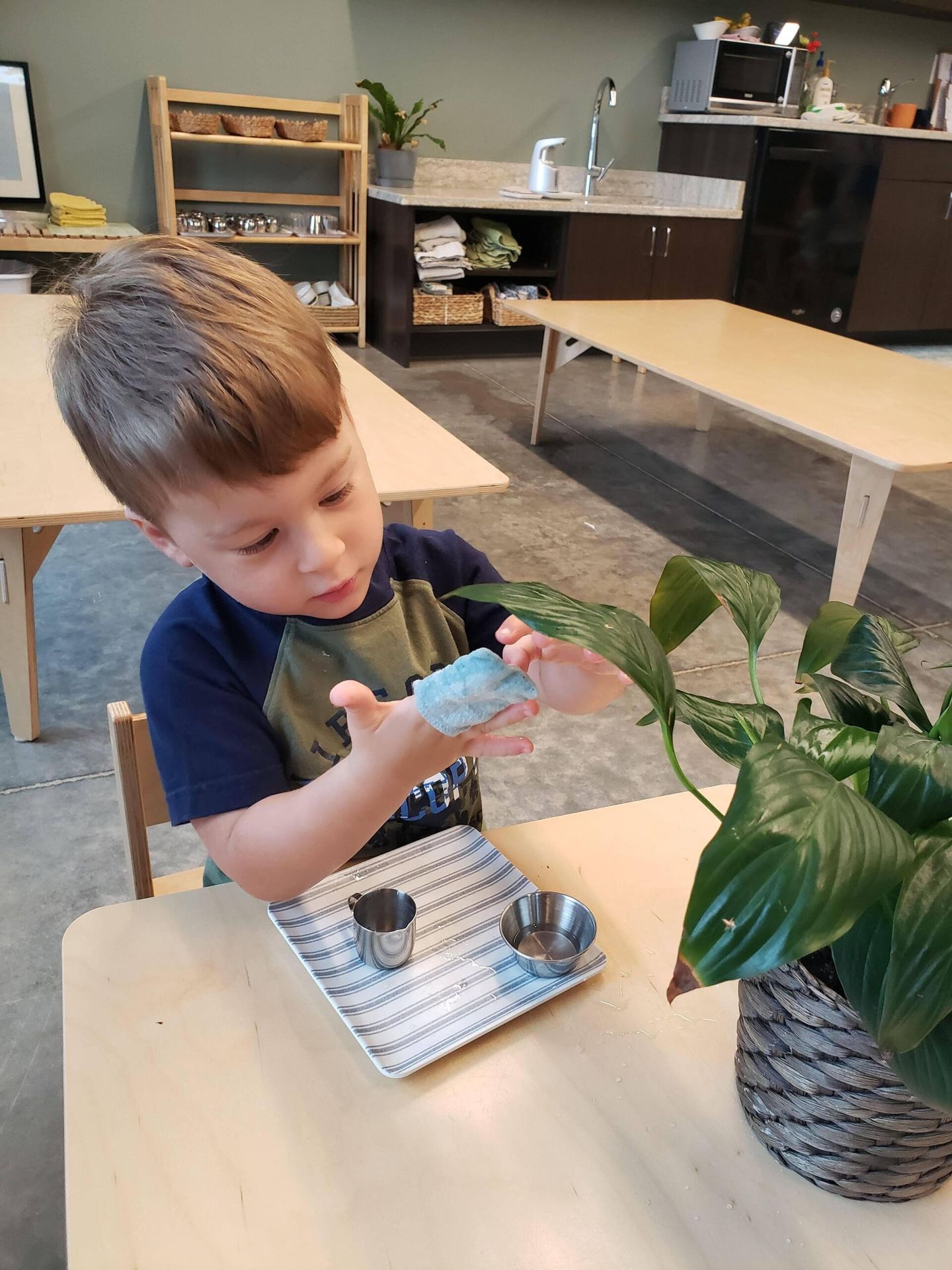
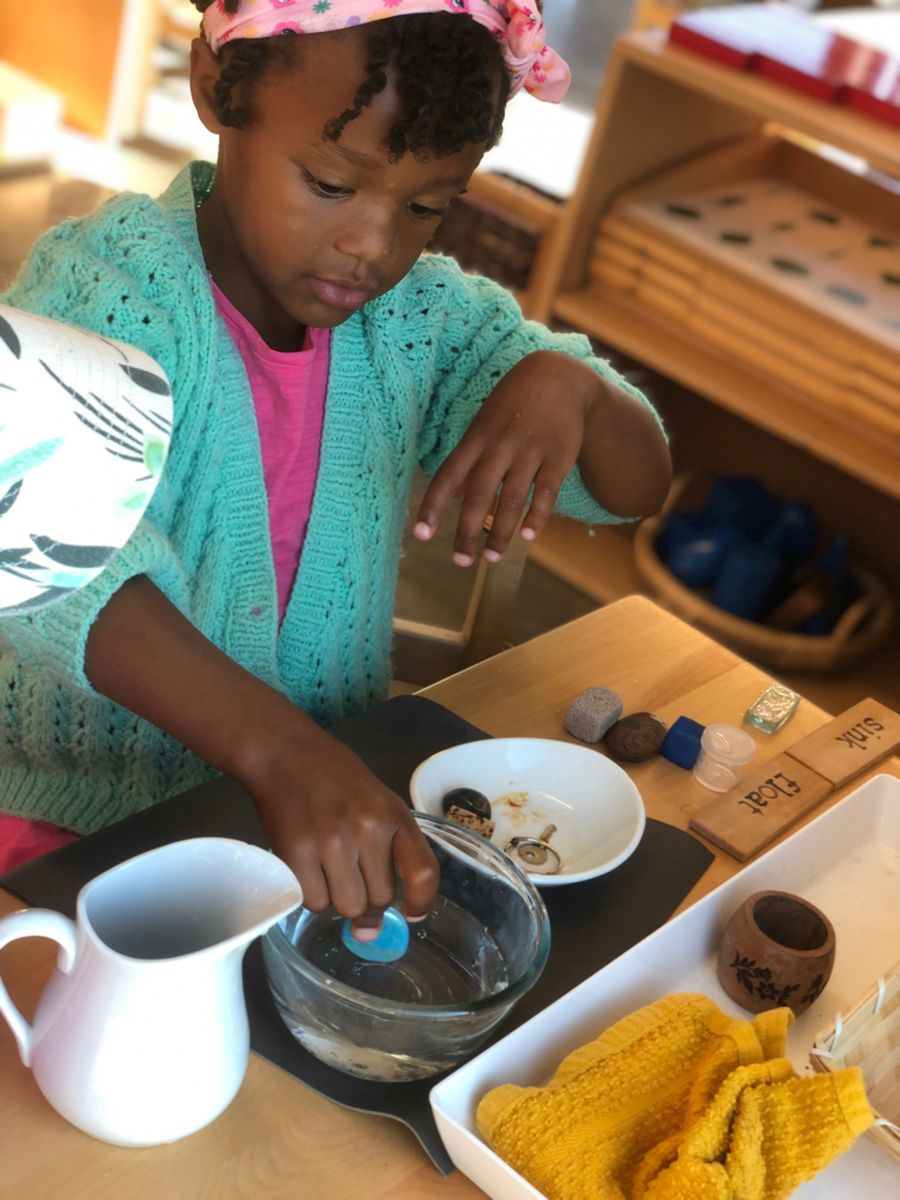
Organized program for learning care of self and self-care
environment (shoe polishing, sink washing, etc.)
|
|
Little emphasis on instruction or classroom maintenance
|
|
Child can work where he/she is comfortable; the child moves
and talks at will (yet doesn't disturb others); group work is voluntary and
negotiable
|
|
Child assigned seat; encouraged to sit still and listen during
group sessions
|
|
Organized program for parents to understand the Montessori
philosophy and participate in the learning process
|
|
Voluntary parent involvement, often only as fundraisers, not
participants in understanding the learning process
|
Can I do Montessori at home with my
child?
Yes, you can use Montessori
principles of child development at home. Look at your home through your child's
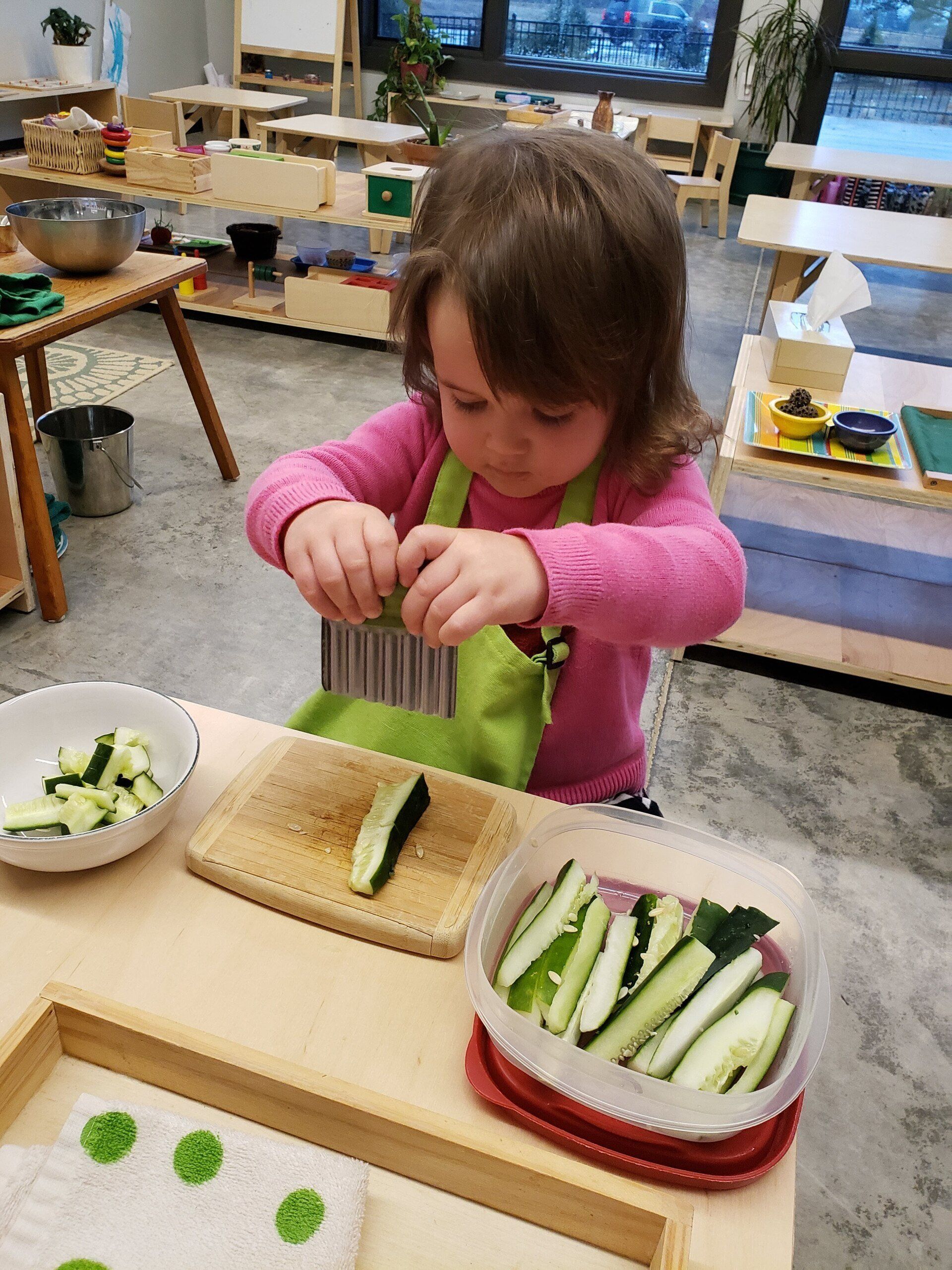
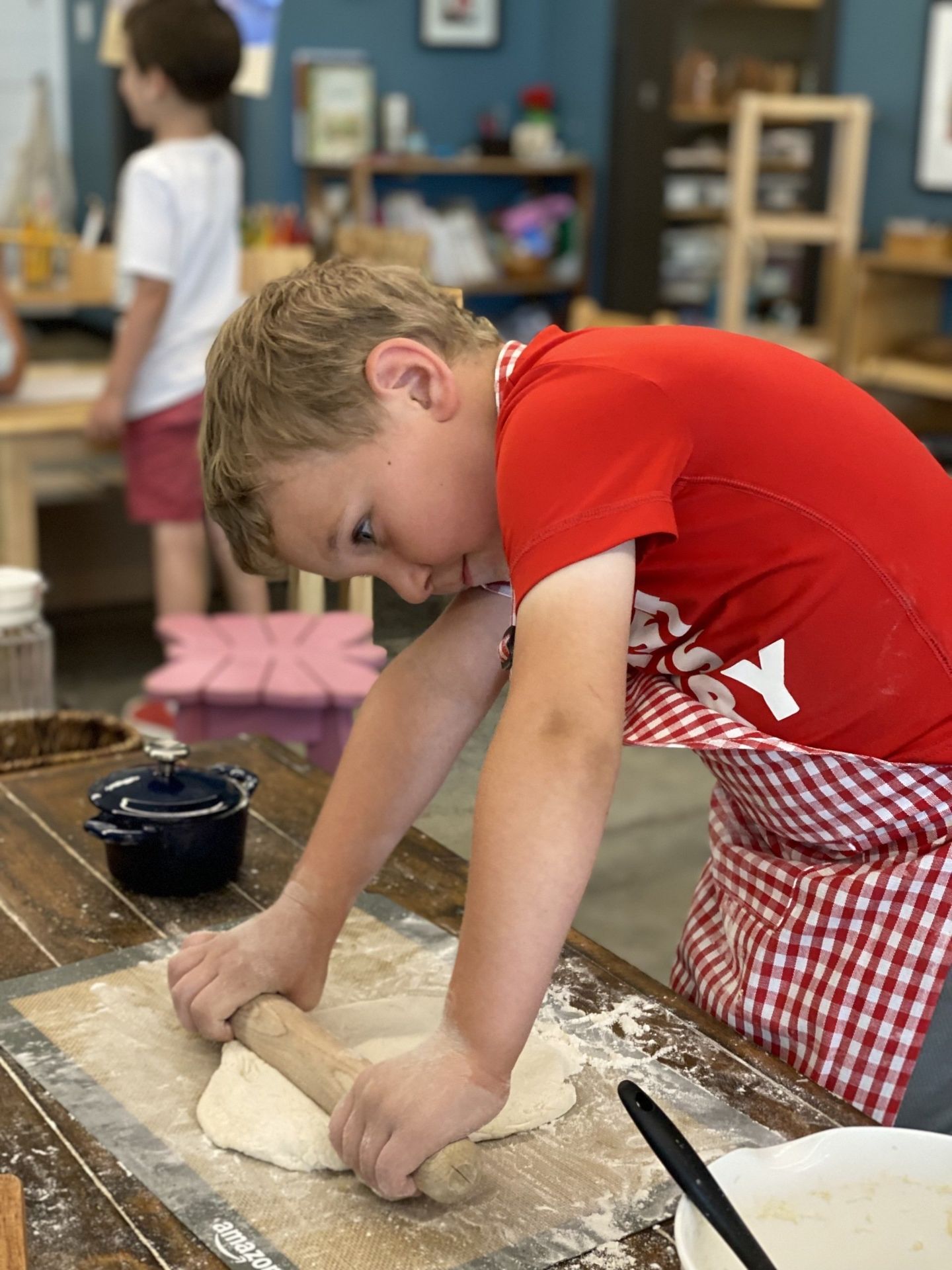
eyes. Children need a sense of belonging, and they get it by participating
fully in the routines of everyday life. "Help me do it by myself" is
the life theme of the preschooler. Can you find ways for your child to
participate in meal preparation, cleaning, gardening, caring for clothes,
shoes, and toys? Providing opportunities for independence is the surest way to
build your child's self-esteem.
At the school level many
homeschooling and other parents use the Montessori philosophy of following
the child's interest and not interrupting concentration to educate their
children.
In school only a trained Montessori
teacher can properly implement Montessori education, using the specialized
learning equipment of the Montessori "prepared environment." Here
social development comes from being in a positive and unique environment with
other children -- an integral part of Montessori education.
What materials are used?
It is the philosophy and the
knowledge of the teacher that is essential in the success of a Montessori
class. One must be wary of the use of
the words "Montessori materials" as many people today use the words
as a selling point for materials that have no use in the Montessori classroom
and can be distracting and impede a child's progress.
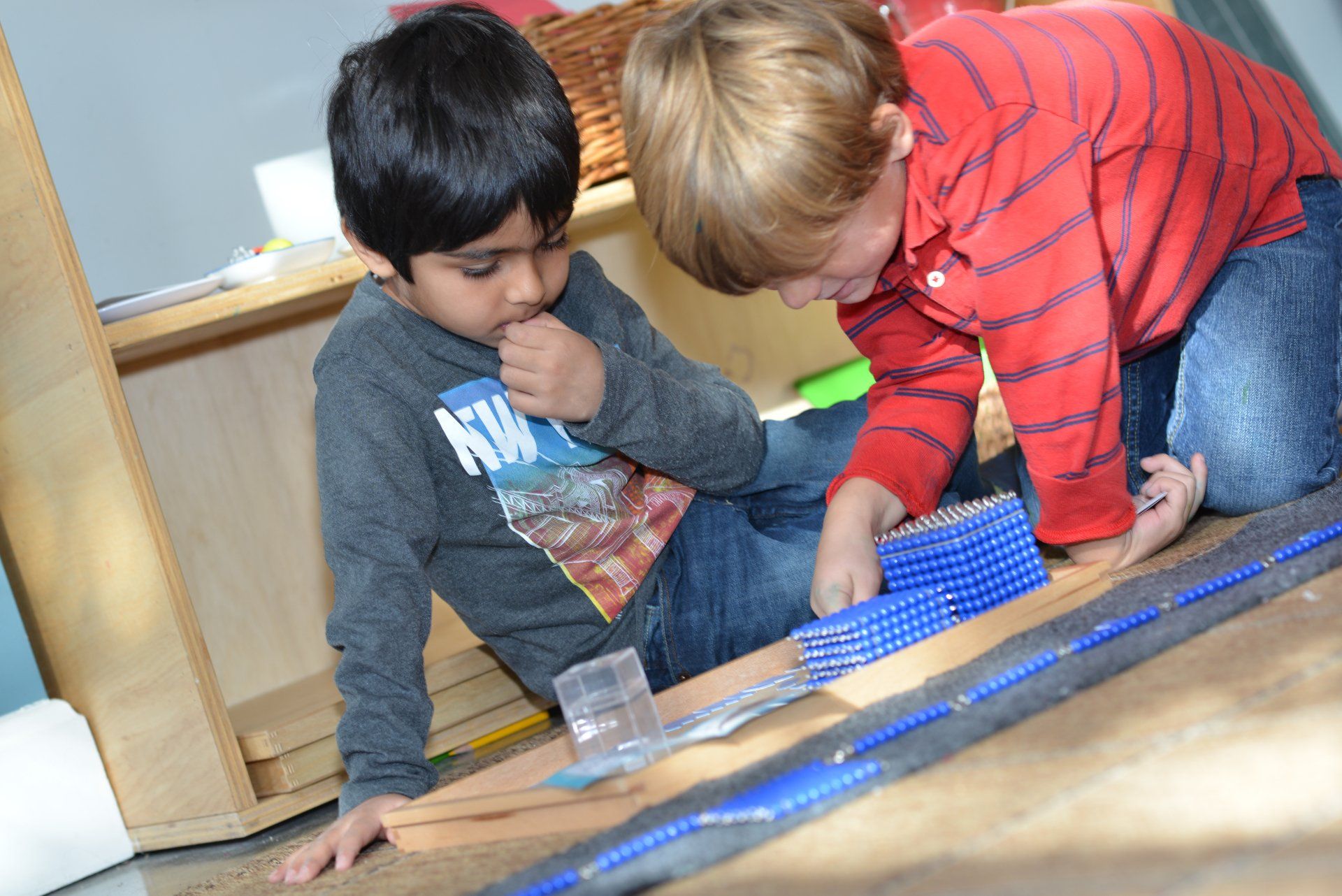
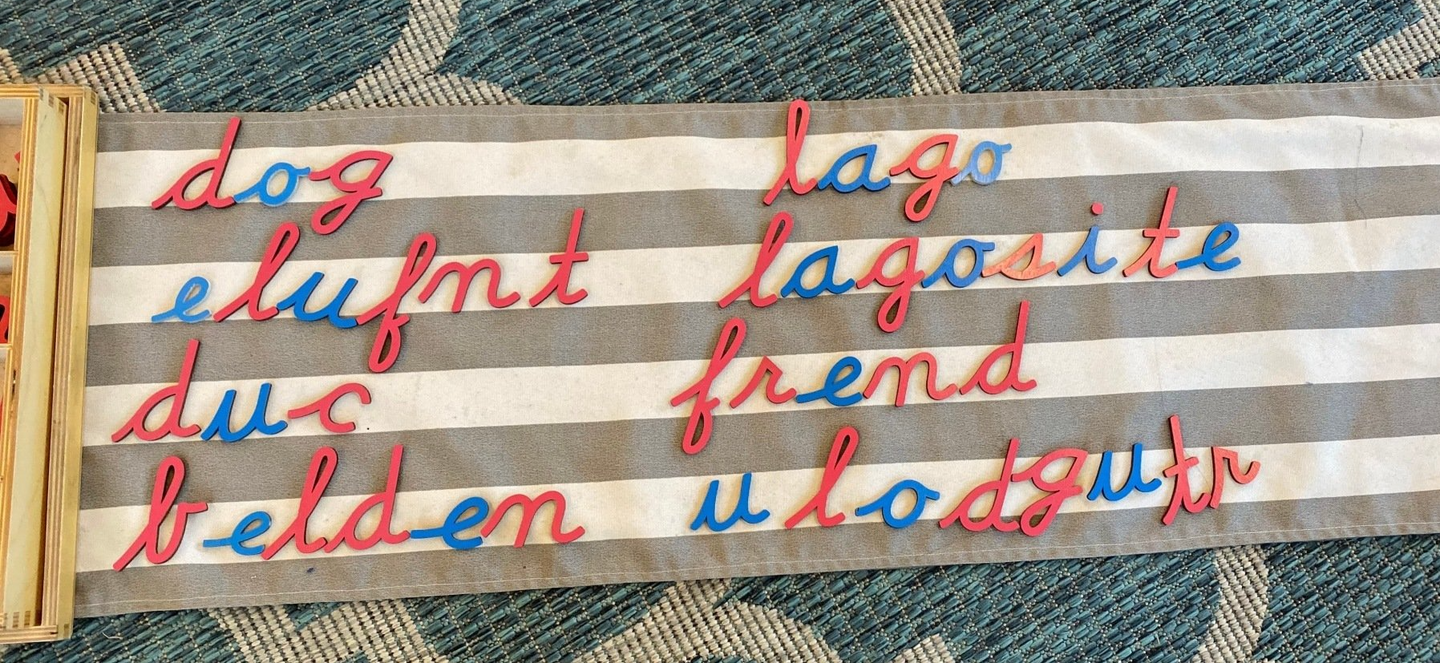
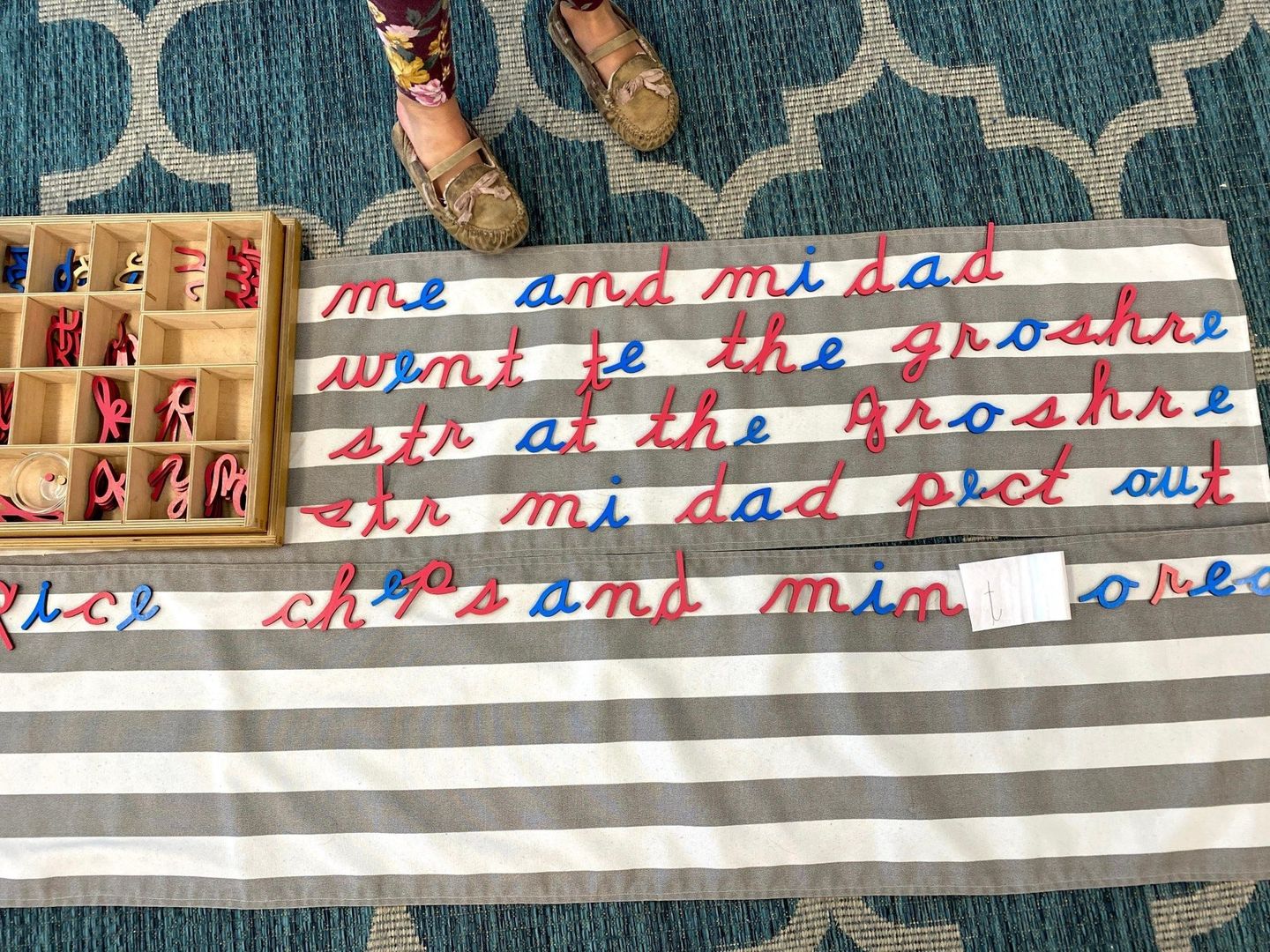
The "sensorial," math, and
some of the language and cultural materials (metal insets, sandpaper letters,
puzzle maps, bells, for example) are professionally manufactured according to
traditional standards that have been tested over many years. However even some
of these are made by newer companies that do not fully understand the reason
for certain details and so produce materials that are not as successful. There
is a "materials committee" in Holland that oversees the quality of materials used in an AMI (Association Montessori
Internationale) school, for example.
Montessori, for very good reasons,
make many of their own practical life and language material instead of buying them—as
they learn to do in their training, depending on where in the world they live.
They gather practical life materials piece by piece. This is an important
process that gives a unique quality to each classroom that expresses the
culture, and ideas of beauty in each community—instead of all classrooms
looking alike with no personal touches.
Materials in the classroom, without
being used correctly by a trained teacher, are usually worthless in creating a
real Montessori class, but they can help in some ways in non-Montessori
situations. For example the math materials have been used to teach a concept
sensorially thus helping a child to make the abstraction. Educational materials
in the Montessori method serve a very different purpose than in traditional education
where the text books are ordered and the teacher learns how to use them. This
difference is because in Montessori the child learns from the environment, and
it is the teacher's job to put the child in touch with the environment, not to
"teach" the child. Thus the creation of the environment, and
selection of materials, is done mostly by the teacher and is very important.
In Montessori education having too
many materials is often worse than not having enough. In this country (USA)
there are many materials suppliers, unfortunately, who are not Montessori
trained and do not understand the purpose of materials, and who sell items that
scatter the child's energy, or waste time, clutter the environment, etc. It is
very important to choose carefully when selecting materials for using the
Montessori method of education in school or in the home.
Are Montessori schools religious?
Some are, but most are not. Some
Montessori schools, just like other schools, operate under the auspices of a
church, synagogue, or diocese, but most are independent of any religious
affiliations.
Is Montessori good for children with
learning disabilities?
Montessori is designed to help all
children reach their fullest potential at their own unique pace. A classroom
whose children have varying abilities is a community in which everyone learns
from one another and everyone contributes. Moreover, multiage grouping allows
each child to find his or her own pace without feeling "ahead" or
"behind" in relation to peers.
Are Montessori children successful
later in life?
Research studies show that
Montessori children are well prepared for later life academically, socially,
and emotionally. In addition to scoring well on standardized tests, Montessori
children are ranked above average on such criteria as following directions,
turning in work on time, listening attentively, using basic skills, showing
responsibility, asking provocative questions, showing enthusiasm for learning,
and adapting to new situations.
The
children need freedom to explore the materials without 'interruptions. Just as
adults dislike distractions when involved in a task, children prefer to
complete their activities without distractions. In the Montessori environment,
they develop their ability to focus their attention. Without unnecessary
interruptions, their attention span increases and they develop concentration
skills. Before children spontaneously share, they must feel free not to share.
In the Montessori environment, the adults protect the right to explore an
activity by themselves at their own pace. Sharing evolves naturally from the
classroom experience. When they desire, they share by communicating and helping
others. The sharing is natural and spontaneous because it comes from within the
child, rather than being forced arbitrary by an adult.
The
children are free to explore the environment and interpersonal relationships in
constructive ways and within limits. The underlying theme is respect; the adult
respects the individuality of each child, the children learn that others have
needs and fights, and that they must respect those needs and rights, the
children are free to explore only so long as their explorations do not include
actions that hurt or disturb any other child. The children learn that what is
good for the group is acceptable and what is not good for the group is
unacceptable.
If I choose a traditional public or
private elementary school for my child, how will he/she adjust?
Our
goal is to prepare children for life's experiences. We prepare them in the
academic area so that most children enter first grade reading or on the brink
of reading. They have a firm understanding of the concept of numbers and the
decimal system. Their abilities to organize themselves and to solve problems
are excellent. Their listening skills and their abilities to respect others and
participate in the community are remarkable. Their confidence and communication
skills are very high. Most importantly of all, they love school and learning
and have positive feelings about themselves. These qualities are assets in any
setting.
MONTESSORI METHODS:
From
the International Montessori Index
The schedule - The three-hour work
period
Under the age of six, there are one
or two 3-hour, uninterrupted, work periods each day, not broken up by required
group lessons. Older children schedule meetings or study groups with each other
the teacher when necessary. Adults and children respect concentration and do
not interrupt someone who is busy at a task. Groups form spontaneously or are
arranged ahead by special appointment. They almost never take precedence over
self-selected work. Note: For more information on the "three-hour work
period" see the chapter "My Contribution to Experimental
Science" from The Advanced Montessori Method, Volume I, by Dr. Maria
Montessori.
Multi-age grouping
Children are grouped in mixed ages
and abilities in three to six year spans: 0-3, 3-6, 6-12 (sometimes temporarily
6-9 and 9-12), 12-15, 15-18. There is constant interaction, problem solving,
child to child teaching, and socialization. Children are challenged according
to their ability and never bored. The Montessori middle and high school teacher
ideally has taken all three training courses plus graduate work in an academic
area or areas.
Work centers
The environment is arranged
according to subject area, and children are always free to move around the room
instead of staying at desks. There is no limit to how long a child can work
with a piece of material. At any one time in a day all subjects -- math,
language, science, history, geography, art, music, etc., will be being studied,
at all levels.
Teaching method - "Teach by
teaching, not by correcting"
There are no papers turned back with
red marks and corrections. Instead the child's effort and work is respected as
it is. The teacher, through extensive observation and record-keeping, plans
individual projects to enable each child to learn what he needs in order to
improve.
Teaching Ratio - 1:1 and 1:30+
Except for infant/toddler groups
(Ratio dictated by local social service regulations), the teaching ratio is one
trained Montessori teacher and one non-teaching aide to 30+ children. Rather
than lecturing to large or small groups of children, the teacher is trained to
teach one child at a time, and to oversee thirty or more children working on a
broad array of tasks. She is facile in the basic lessons of math, language, the
arts and sciences, and in guiding a child's research and exploration,
capitalizing on his interest in and excitement about a subject. The teacher
does not make assignments or dictate what to study or read, nor does she set a
limit as to how far a child follows an interest.
Basic lessons
The Montessori teacher spends a lot
of time during teacher training practicing the many lessons with materials in
all areas. She must pass a written and oral exam on these lessons in order to
be certified. She is trained to recognize a child's readiness according to age,
ability, and interest in a specific lesson, and is prepared to guide individual
progress.
Areas of study
All subjects are interwoven, not
taught in isolation, the teacher modeling a "Renaissance" person of
broad interests for the children. A child can work on any material he
understands at any time.
Class size
Except for infant/toddler groups,
the most successful classes are of 30-35 children to one teacher (who is very
well trained for the level she is teaching), with one non-teaching assistant.
This is possible because the children stay in the same group for three to six
years and much of the teaching comes from the children and the environment.
Learning styles
All kinds of intelligences and
styles of learning are nurtured: musical, bodily-kinesthetic, spatial,
interpersonal, intrapersonal, intuitive, and the traditional linguistic and
logical-mathematical (reading, writing, and math). This particular model is
backed up by Harvard psychologist Howard Gardner's theory of multiple
intelligences.
Assessments
There are no grades, or other forms
of reward or punishment, subtle or overt. Assessment is by portfolio and the
teacher's observation and record keeping. The test of whether or not the system
is working lies in the accomplishment and behavior of the children, their
happiness, maturity, kindness, and love of learning and level of work.
Requirements for age 0-6
There are no academic requirements
for this age, but children are exposed to amazing amounts of knowledge and
often learn to read, write and calculate beyond what is usually thought
interesting to a child of this age.
Requirements for ages 6-18
The teacher remains alert to the
interests of each child and facilitates individual research in following
interests. There are no curriculum requirements except those set by the state,
or college entrance requirements, for specific grade levels. These take a
minimum amount of time. From age six on, students design contracts with the
teacher to guide their required work, to balance their general work, and to
teach them to become responsible for their own time management and education.
The work of the 6+ class includes subjects usually not introduced until high
school or college.
Character education
Education of character is considered
equally with academic education, children learning to take care of themselves,
their environment, each other - cooking, cleaning, building, gardening, moving
gracefully, speaking politely, being considerate and helpful, doing social work
in the community, etc.
|